




The short stature homeobox gene SHOX
SHOX
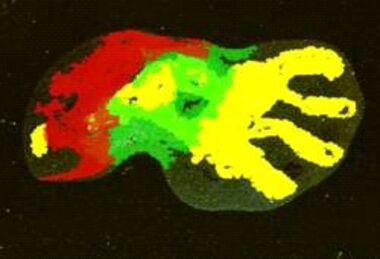
SHOX deficiency is the most frequent genetic growth disorder associated with isolated and syndromic forms of short stature. Caused by mutations in the homeobox gene SHOX, its varied clinical manifestations include isolated short stature, tall stature, Léri-Weill dyschondrosteosis, and Langer mesomelic dysplasia. In addition, SHOX deficiency contributes to the skeletal features in Turner syndrome and was described in club foot and MRKH syndrome. Causative SHOX mutations have allowed downstream pathology to be linked to defined molecular lesions. Expression levels of SHOX are tightly regulated, and almost half of pathogenic mutations have affected enhancers. Clinical severity of SHOX deficiency varies between genders and ranges from normal stature/mild short stature to profound mesomelic skeletal dysplasia. Treatment options for children with SHOX deficiency are available. Two decades of research support the concept of SHOX as a transcription factor that integrates diverse aspects of bone development, growth plate biology, and apoptosis. Neurological aspects of this gene have been poorly covered so far. Due to its absence in mouse, the animal models of choice have become chicken and zebrafish. These models, therefore, together with micromass cultures, primary cell lines and genome-edited CRISPR-Cas9 lines have been used to address SHOX function. Pathway and network analysis have identified interactors, target genes, and regulators
Publications
Rao, E., Weiss, B., Fukami, M., Rump, A., Niesler, B., Mertz, A., Moroya, K., Binder, G., Kirsch, S. Winkelmann, M., Heinrich, U., Breuning, M.H., Ranke, M., Rosenthal, A., Ogata, R., Rappold, G.A.: Pseudoautosomal deletions encompassing a novel homeobox gene cause growth failure in idiopathic short stature and Turner Syndrome. Nature Genet. 16: 54-63, 1997.
Durand C, Rappold GA: Height matters-from monogenic disorders to normal variation. Nature Rev Endocrinol. 9(3): 171-7, 2013.
Marchini A, Ogata T, Rappold GA: A track record on SHOX: from basic research to complex models and therapy. Endocr Rev. 37(4): 417-48, 2016.
Montalbano A, Juergensen L, Roeth R, Weiss B, Fricke-Otto S, Binder G, Ogata T, Fukami M, Decker E, Nuernberg G, Hassel D, Rappold GA: Retinoic acid catabolizing enzyme CYP26C1 is a genetic modifier in SHOX deficiency. EMBO Mol Med. 8(12): 1455-69, 2017.
Rappold, G., Blum, W.F. Crowe, B. J., Röth, R., Shavrikova, E.P., Quigley, C., Ross, J.L., Niesler, B.: Genotypes and Phenotypes in children with Short stature: Clinical indicators of SHOX haploinsufficiency. J Med Genet. 44: 306-313, 2007.
Blum, W.F., Crowe, B.J., Quigley, C.A., Jung, H., Cao, D., Ross, J.L., Braun, L., Rappold, G.: Growth hormone is effective in treatment of short stature associated with SHOX deficiency: Results of a randomized, controlled, multi-center trial. J Clin Endocrin Metab. 92: 219-228, 2007.