

-
Working Groups
- Climate Change and Health Intervention
- Climate Change, Nutrition and Health
- Climate Change, Migration and Health
- Heidelberg Planetary Health Hub (Hei-Planet)
- Climate-smart Health Systems
- Closing pandemic health gaps
- Design and implementation research in global health
- Digital Global Health
- Disease Control in Disadvantaged Populations
- Epidemiology and Biostatistics
- Epidemiology of Transition
- FAIR and ethical data and sample reuse
- Field Epidemiology Research in German Public Health
- Global Child Health
- Global Health and Economics Research Group
- Global Health Diagnostics
- Global Health Policies and Systems
- Health Economics and Health Financing
- Health Policy and Integrated Knowledge Translation
- Implementation research for prevention and disease control
- Injury Epidemiology and Prevention
- Mathematical Modelling of Infectious Diseases
- Non-communicable disease (NCD) in LMICs
- Non-Communicable Diseases (NCDs) Implementation Research
- Oral Health
- Planetary Child Health
- Science Communication
- Vector Borne Diseases and Geo Health
HEALTH POLICY AND INTEGRATED KNOWLEDGE TRANSLATION
AIM
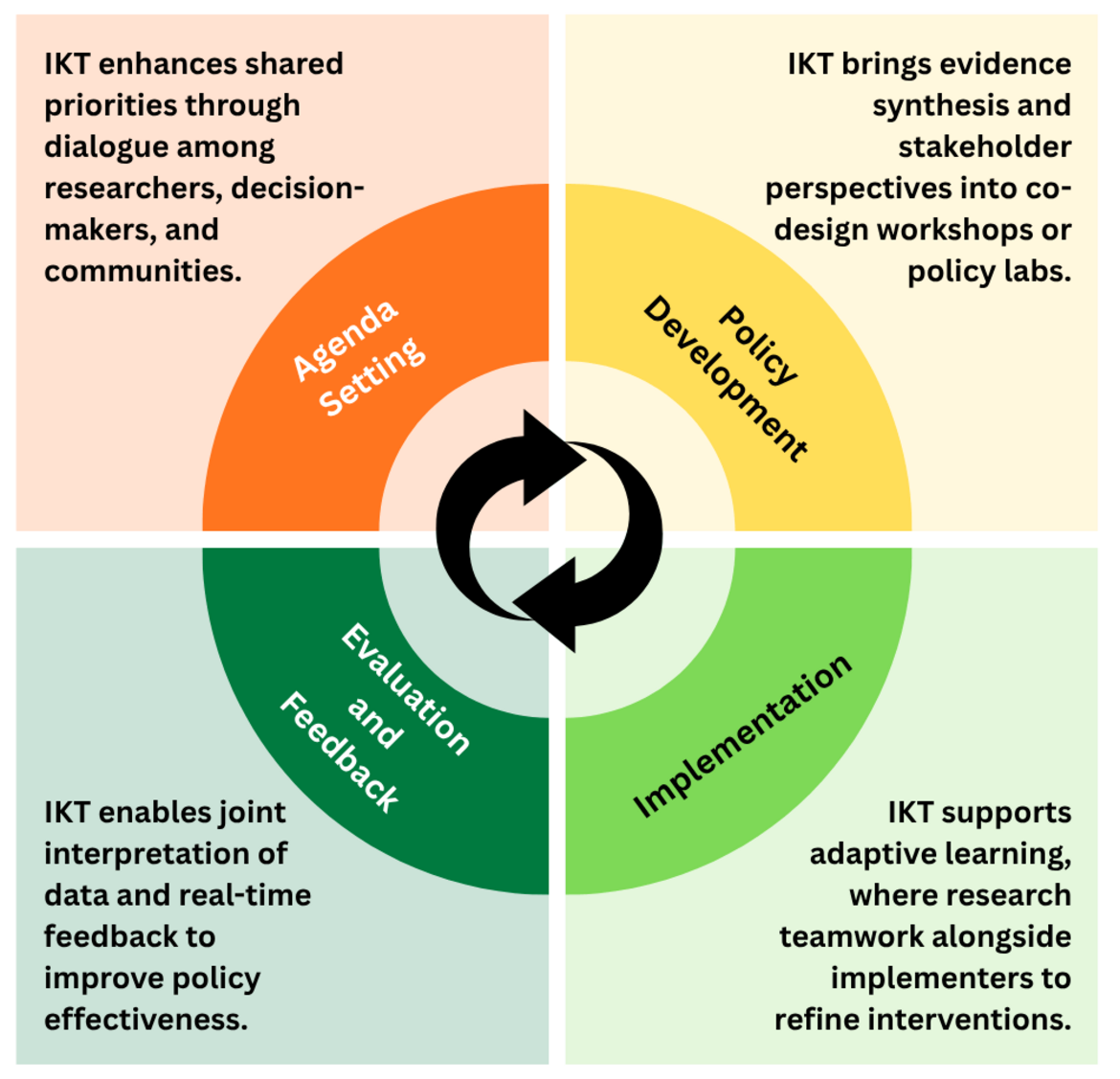
The aim of the Health Policy and Integrated Knowledge Translation (HPiKT) Working Group is to strengthen the connection between evidence and policy by fostering genuine collaboration among researchers, policy-makers, practitioners, and communities. By integrating IKT principles into health policy processes, the group seeks to ensure that research is co-produced, contextually relevant, and directly responsive to policy and system needs. This approach bridges the traditional gap between knowledge generation and decision-making, promotes mutual learning, and enhances the uptake of evidence in real-world policy development and implementation. Ultimately, the Working Group aims to advance more equitable, evidence-informed, and sustainable health policies that improve outcomes for populations and health systems alike.
OBJECTIVES
The HPiKT Working Group will provide a forum for HIGH researchers and hopefully with time and through funded projects for policy-makers, practitioners, and community representatives to share knowledge, build capacity, and advance the practice of IKT in health policy contexts. Specifically, we will aim to:
- Build capacity - Set up an iKT short course open to HIGH members, PhD and Masters students as well as external participants
- Network – team up with HIGH members, university teams etc. that need to identify and co-produce knowledge on effective IKT approaches in policy and health systems
- Collaboration - Support the translation of research findings into actionable policy recommendations in various projects across HIGH and beyond e.g. policy briefs
- Set-up Forums - Facilitate exchange between academic, policy, and community stakeholders
Team Members
- Joy Akpan (Group Leader)
- Samuel Mayeden
- Mariela Gallardo
- Fiona Walsh
- Irene Brandt
- Christine Neumann
-
Working Groups
- Climate Change and Health Intervention
- Climate Change, Nutrition and Health
- Climate Change, Migration and Health
- Heidelberg Planetary Health Hub (Hei-Planet)
- Climate-smart Health Systems
- Closing pandemic health gaps
- Design and implementation research in global health
- Digital Global Health
- Disease Control in Disadvantaged Populations
- Epidemiology and Biostatistics
- Epidemiology of Transition
- FAIR and ethical data and sample reuse
- Field Epidemiology Research in German Public Health
- Global Child Health
- Global Health and Economics Research Group
- Global Health Diagnostics
- Global Health Policies and Systems
- Health Economics and Health Financing
- Health Policy and Integrated Knowledge Translation
- Implementation research for prevention and disease control
- Injury Epidemiology and Prevention
- Mathematical Modelling of Infectious Diseases
- Non-communicable disease (NCD) in LMICs
- Non-Communicable Diseases (NCDs) Implementation Research
- Oral Health
- Planetary Child Health
- Science Communication
- Vector Borne Diseases and Geo Health