04.03.2024
On March 18 and 19, 2024, NEW_LIVES will host an international conference "Towards Genomic Newborn Screening in Germany: Risks, Opportunities, Challenges" at Heidelberg University. Digital participation via Zoom is possible.
Read Article
04.03.2024
On March 18 and 19, 2024, NEW_LIVES will host an international conference "Towards Genomic Newborn Screening in Germany: Risks, Opportunities, Challenges" at Heidelberg University. Digital participation via Zoom is possible.
Read Article
29.11.2023
The Fritz Thyssen foundation is supporting the organization of an international conference "Towards Genomic Newborn Screening in Germany: Risks, Opportunities, Challenges" at Heidelberg University in March 2024 with a generous grant.
Read ArticleSince the late 1960s, virtually all newborns in Germany have been standardly tested for a number of rare but severe diseases, since a timely diagnosis and treatment of these diseases significantly improves their prognosis. Thousands of young patients have profited from Germany’s newborn screening program. In part, its success is also due to the program’s continued development, which led to the inclusion of further target diseases and new methods of analysis. The maturation of new genomic technologies now offers the opportunity to expand newborn screening once again and in particularly significant ways. At the same time, such an expansion would come with considerable medical, ethical, legal, and social challenges.
Is genomic newborn screening (gNBS) a reasonable option for Germany? How can we realize the significant health benefits offered by the new technologies and at the same time minimize potential risks for everyone involved? Our interdisciplinary research group “NEW_LIVES: Genomic NEWborn Screening Programs – Legal Implications, Value, Ethics and Society” aims to address these questions. Generously funded by the German Federal Ministry of Education and Research, NEW_LIVES joins researchers from five different disciplines at Heidelberg University Hospital, the Heidelberg University Faculty of Medicine, and the University of Mannheim and is carried out in close consultation with representatives of patient organizations.
On this website, we would like to inform you about the opportunities and challenges of a potential genomic newborn screening program and the research conducted in our five subprojects.
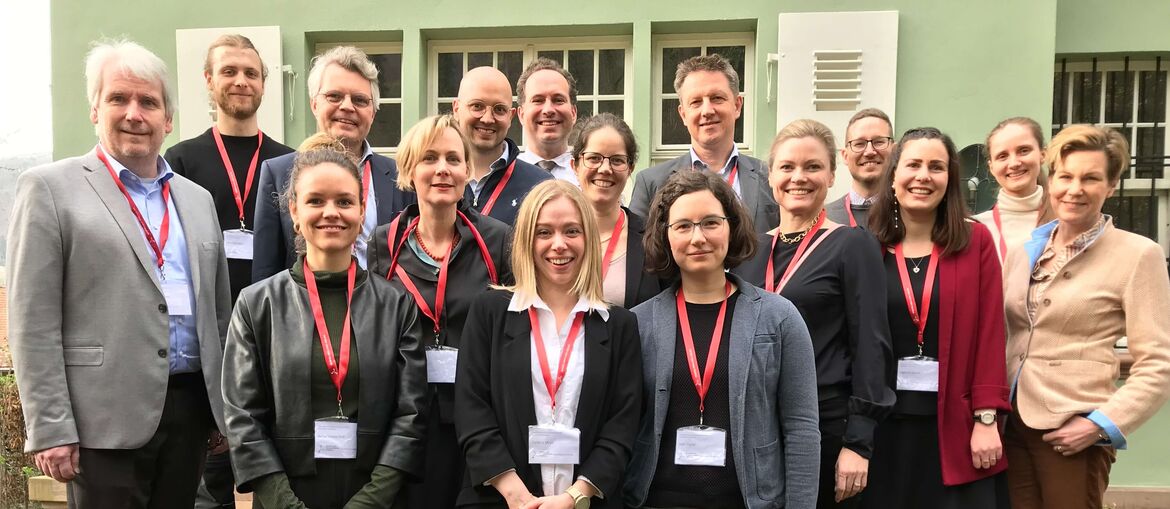
NEW_LIVES Project Partners at the conference “Towards Genomic Newborn Screening in Germany” in March 2024 at the Internationales Wissenschaftsforum Heidelberg (IWH).