

Design and implementation research in global health
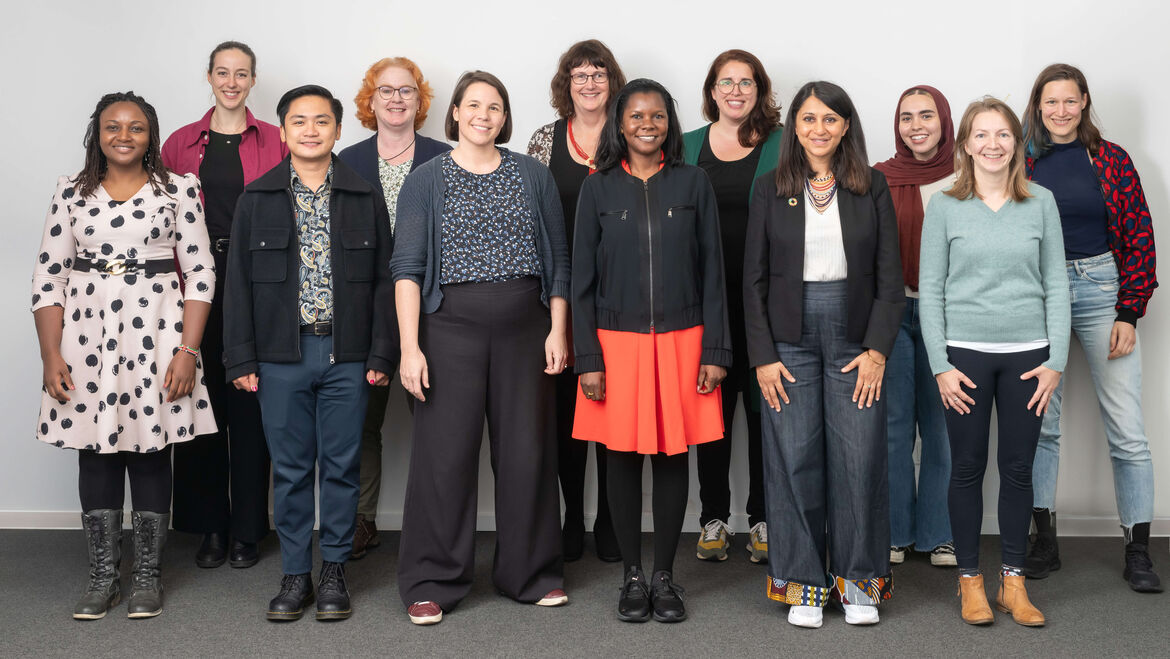
We are a team of researchers dedicated to advancing global health through rigorous, equity-driven design and implementation research. With a focus on qualitative and participatory methods, we explore how health programs and policies play out in end-users’ lives, and we work with communities and stakeholders to co-design interventions that are acceptable, appropriate, and successful in real-world settings.
About
Our group emphasizes the use of qualitative research to inform the design, implementation, and evaluation of public health programs and interventions. We cherish established qualitative approaches (interviews, focus groups and observation), but we also aim to push qualitative techniques forward via, for example, debriefings, document reviews, epistemic interviews, journaling, media analysis, letter writing, photovoice, artefact-driven dialogue, and engagement with large language models. However, we also routinely incorporate quantitative methods to evaluate our intervention prototypes, to triangulate design research insights, or to quantify the impact of larger health policy shifts on treatment availability.
A defining characteristic of the group is our transdisciplinarity; we partner with teams of artists, trialists, social scientists, clinicians, policymakers and epidemiologists to co-design interventions or surveys, to understand process-based perspectives amid intervention roll-out, and to capture summative insights regarding how end-users or implementers perceive an intervention.
Key Research Areas
- Innovative qualitative methods
- Intervention co-design
- Integrated knowledge transfer
- Process and summative evaluations
- Participatory community engagement
Selected Publications
- Reñosa, M. D. C., Mwamba, C., Meghani, A., et al. (2021). Selfie consents, remote rapport, and Zoom debriefings: Collecting qualitative data amid a pandemic in four resource-constrained settings. BMJ Global Health, 6, e004193. https://doi.org/10.1136/bmjgh-2020-004193
- Wachinger, J., Bärnighausen, K., Schäfer, L. N., Scott, K., & McMahon, S. A. (2025). Prompts, pearls, imperfections: Comparing ChatGPT and a human researcher in qualitative data analysis. Qualitative Health Research, 35(9), 951–966. https://doi.org/10.1177/10497323241244669
- Dalglish, S. L., Khalid, H., & McMahon, S. A. (2020). Document analysis in health policy research: The READ approach. Health Policy and Planning, 35(10), 1424–1431. https://doi.org/10.1093/heapol/czaa064
- McMahon, S. A., & Winch, P. J. (2018). Systematic debriefing after qualitative encounters: An essential analysis step in applied qualitative research. BMJ Global Health, 3, e000837. https://doi.org/10.1136/bmjgh-2018-000837
- Berner-Rodoreda, A., Bärnighausen, T., Kennedy, C., et al. (2018). From doxastic to epistemic: A typology and critique of qualitative interview styles. Qualitative Inquiry, 26(3–4), 291–305. https://doi.org/10.1177/10778004188107
- Wachinger, J., Reñosa, M. D., Guevarra, J. R., et al. (2025). Systematic extraction and qualitative framing analysis of health-related online media content: Introducing the FOCUS approach. International Journal of Qualitative Methods, 24, 16094069251385443. https://doi.org/10.1177/16094069251385443
- Akinreni, T., Reñosa, M. D., Putri, A. Z., Scott, K., & McMahon, S. A. (2024). A methodological review of solicited diaries as a qualitative tool in health research in low- and middle-income countries. SSM - Qualitative Research in Health, 6, 100492. https://doi.org/10.1016/j.ssmqr.2024.100492
- Wachinger, J., Reñosa, M. D. C., Guevarra, J. R., et al. (2023). Keeping the customer satisfied: Applying a Kano model to improve vaccine promotion in the Philippines. Global Health: Science and Practice, 11(6), e2300199. https://doi.org/10.9745/GHSP-D-23-00199
- Buitrago-García, T., Sawadogo, N. H., Souares, A., et al. (2022). Female-friendly toilets in schools in Burkina Faso: A mixed-methods study using photo-elicitation. Journal of Global Health, 12, 04057. https://doi.org/10.7189/jogh.12.04057
- Reñosa, M. D. C., Bärnighausen, K., Wachinger, J., et al. (2024). Messy but worth it: Human-centred design as applied within a successful vaccine-promotive campaign. BMJ Global Health, 9(7), e014870. https://doi.org/10.1136/bmjgh-2023-014870
For a full and up-to-date list of publications across all phases of intervention co-design and implementation, please see our Google Scholar profiles:
Projects
Community-based engagement and interventions to stem the tide of antimicrobial resistance spread in the aquatic environments catalysed by climate change and plastic pollution interactions (TULIP Planetary Health)
In the Philippines, our team uses participatory, human-centred, and integrated knowledge translation (IKT) approaches to engage communities and decision-makers on issues of plastic pollution and AMR. Our objective is to co-develop contextually appropriate interventions, and to strengthen the evidence ecosystem to support the uptake of research into policy and practice.
Evaluation of 7-day vs 1-day packaging of small quantity lipid-based nutrient supplementation (SQ-LNS)
In Ethiopia, Sierra Leone, and the Philippines, we are drawing on interviews, photovoice, and a randomized trial to explore how switching from daily sachets to multi-day packages for children’s nutrition supplements changes intervention acceptability and use.
Sociocultural insights to strengthen precision psychiatry: a human-centered design framework to adapt and pilot a digital mental health intervention with adolescents (MAISHA)
In Tanzania and Kenya, we are exploring how to make digital mental health support work better for teenagers in different cultural settings. Researchers in East Africa are co-designing and testing a mix of app-based and face-to-face support to help young people manage emotions and improve mental wellbeing.
Apply human factor engineering principles to choose the most optimal configuration of the AveloMask in a diagnostic and screening use case (B-PATH)
In Germany and South Africa, we are drawing on qualitative and participatory methods to explore how breath samples and wearable mask-based technologies could facilitate point-of-care diagnosis of respiratory infections.
Artificial Intelligence and Youth Mental Health Support: Evidence from Three Contexts and Co-Created Guidance (AI-YMHS)
In Tanzania, Kenya and Germany, we are exploring how young people in different global contexts use generative AI for emotional and mental health support. The study combines qualitative research with analysis of AI responses to identify patterns, biases, and potential risks. Through participatory methods, the project co-develops youth-centred guidance for safe and ethical AI use, it and aims to inform policy and practice by providing evidence-based, culturally sensitive recommendations for AI-supported mental health.
Team

PD Dr. Shannon A McMahon
Group Leader
Heidelberg Institute of Global Health
mcmahon [at] uni-heidelberg [dot] de
Dr. Mark Donald Reñosa
Group Co-lead
Postdoctoral Researcher
Uniklinikum Heidelberg & Heidelberg Institute of Global Health (HIGH)
drmarkdonaldrn [at] gmail [dot] com

Dr. Jonas Wachinger
Group Co-lead
Postdoctoral Researcher
Heidelberg Institute of Global Health
jonas.wachinger [at] uni-heidelberg [dot] de
Dorit Ann
Dr. med. Student
Heidelberg Institute of Global Health
dorit.ann [at] gmail [dot] com
Juliana Bwire
Research associate
Heidelberg Institute of Global Health
julianabwire [at] gmail [dot] com
Ramona Godbole
Alhaji Mohamed Kamara
PhD student
Heidelberg Institute of Global Health
alhaji.kamara [at] uni-heidelberg [dot] de
Selina Müller
Dr. med. Student
Heidelberg Institute of Global Health
selina.mueller [at] med.uni-heidelberg [dot] de
Agrin Putri
Research and Teaching Assistant
Heidelberg Institute of Global Health
agrin.putri [at] uni-heidelberg [dot] de

Katherine Ann Reyes
PhD student
Heidelberg Institute of Global Health
kvreyes1 [at] up.edu [dot] ph
Esther Rugendo
PhD student
Heidelberg Institute of Global Health
esther.rugendo [at] uni-heidelberg [dot] de
Josephine Schwab
Dr. med. Student
Heidelberg Institute of Global Health
j.schwab [at] stud.uni-heidelberg [dot] de
Louis Schäfer
Dr. med. Student
Heidelberg Institute of Global Health
louis.schaefer [at] stud.uni-heidelberg [dot] de
Collaborators
Dr. Kate Bärnighausen
Heidelberg Institute of Global Health, Heidelberg, Germany
Dr. Erica Breuer
The University of Newcastle, Newcastle, Australia
Dr. Astrid Berner-Rodoreda
Heidelberg Institute of Global Health, Heidelberg, Germany
Dr. Sarah Dalglish
University College London, London, England
Dr. Alexandre Infanti
University of Lausanne, Lausanne, Switzerland
Prof. Dr. Charlotte Köhler
European University Viadrina, Viadrina, Germany
Prof. Kenneth Ngure
Jomo Kenyatta University of Agriculture and Technology, Nairobi, Kenya
Prof. Christine Nalwadda Kayemba
Makerere University School of Public Health, Kampala, Uganda
Prof. Catie Oldenburg
Bursky School of Public Health at Washington University, St. Louis, USA
Annika Reinhold
Central Institute of Mental Health, Mannheim, Germany
Prof. Kerry Scott
Assistant Professor, York University, Toronto, Canada
Yachen Wang
Chinese Academy of Medical Sciences & Peking Union Medical College, Beijing, China
Contact
Anne Seller
Group Administrator
anne.seller [at] uni-heidelberg [dot] de
For general enquiries, please contact HIGH-Design [at] uni-heidelberg [dot] de

Group Leader
Working Group Leader, Heidelberg Institute of Global Health, Heidelberg, Germany
mcmahon [at] uni-heidelberg [dot] de
Group Co-lead
Dr. Mark Donald Reñosa
Working Group Co-lead, Uniklinikum Heidelberg & Heidelberg Institute of Global Health (HIGH)
drmarkdonaldrn [at] gmail [dot] com

Group Co-lead
Working Group Co-lead, Heidelberg Institute of Global Health
jonas.wachinger [at] uni-heidelberg [dot] de
Group Administrator
Anne Seller
Heidelberg Institute of Global Health
anne.seller [at] uni-heidelberg [dot] de